
The Snakeskin Grisette - Mushroom, Myth & Mystery
- Moonshine Belafonte
- Oct 15, 2025
- 3 min read

Updated: Oct 23, 2025
If you’ve ever wandered through a woodland in late summer or early autumn, you might spot a tall, graceful mushroom with a patterned stem that seems to whisper of hidden worlds. That could be the snakeskin grisette (Amanita ceciliae). It’s a fungus that invites both scientific curiosity and magical imagination.
Below is your beginner’s guide with a mystical twist.
Meet the Snakeskin Grisette
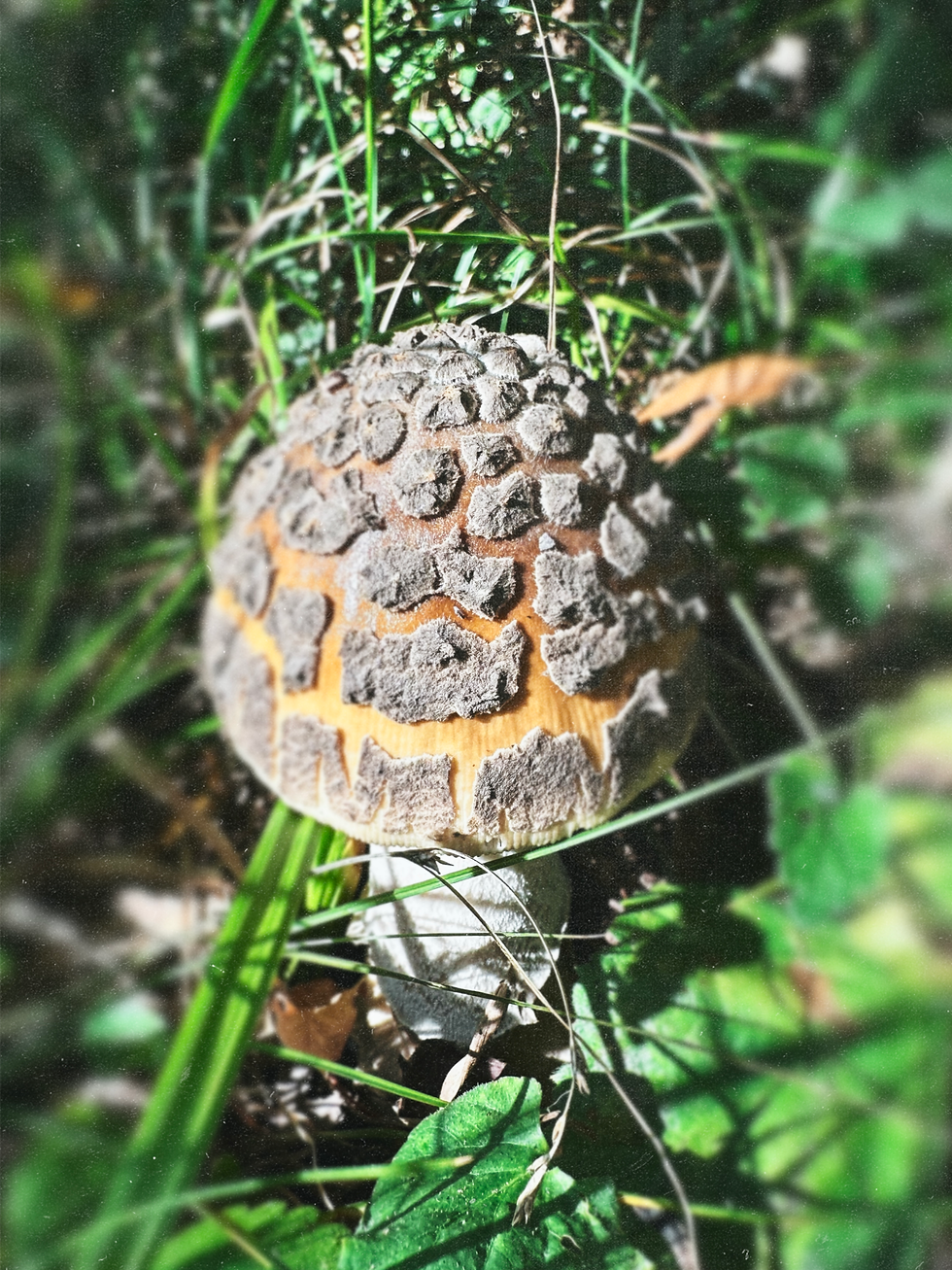
The snakeskin grisette belongs to the genus Amanita, a group that includes some of nature’s most iconic and perilous mushrooms. But unlike many famous Amanita, this one is ringless, subtle, often underappreciated.
Grisettes (the subgroup it belongs to) share certain traits:
No ring on the stem Growth from a volva (a sack-like base) Striated edges on the cap
The snakeskin grisette carries these features plus a snakeskin pattern on its stem, giving it a symbolic resonance as a boundary creature, intimate with hidden realms.

How to Recognize It
Here’s a concise identification guide (for the curious, not the cook):
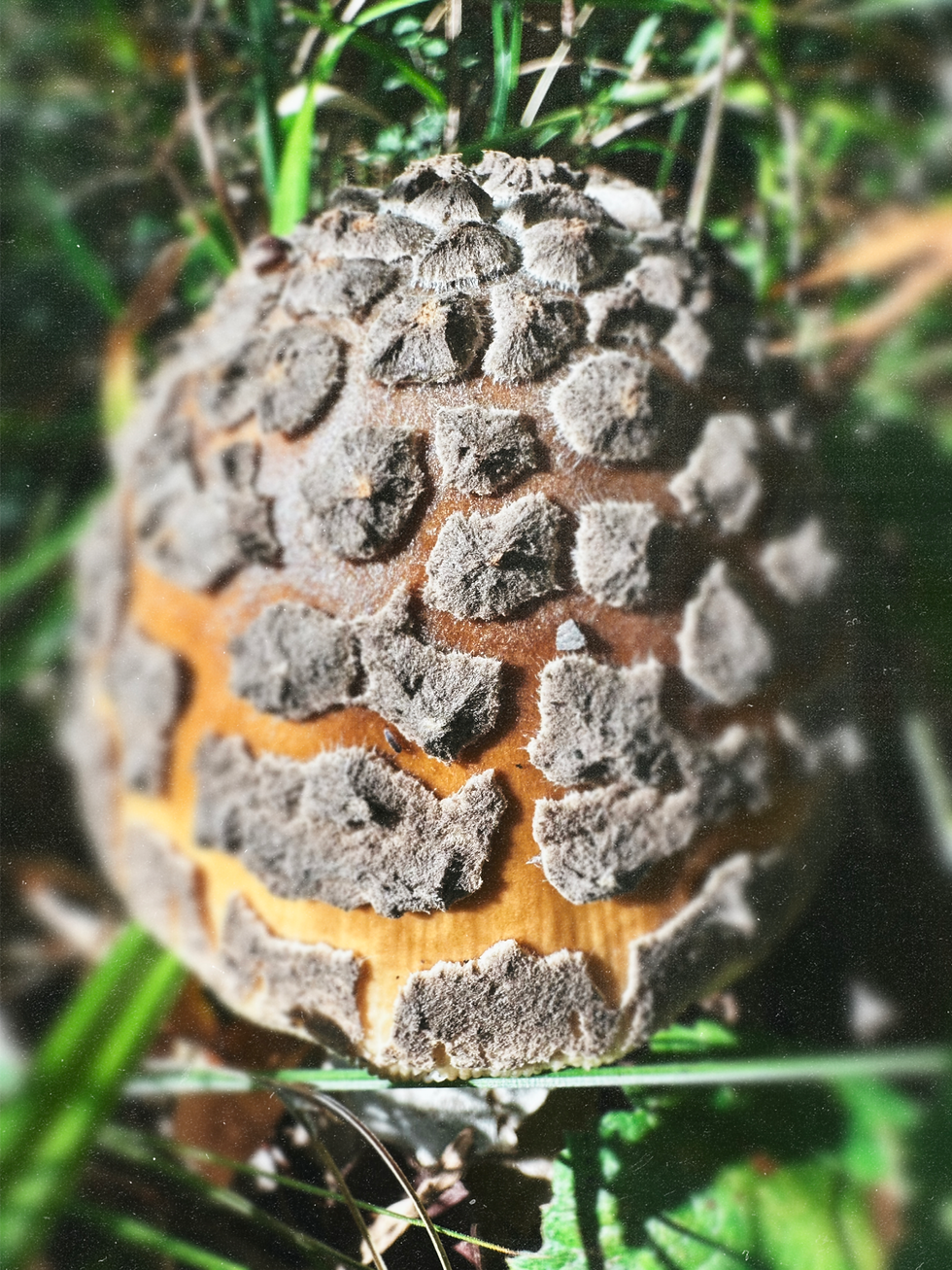
🍄🟫 Cap: Olive to grey-brown, darker toward the center, with fragments of veil. The edge is striated (grooved) as it matures.
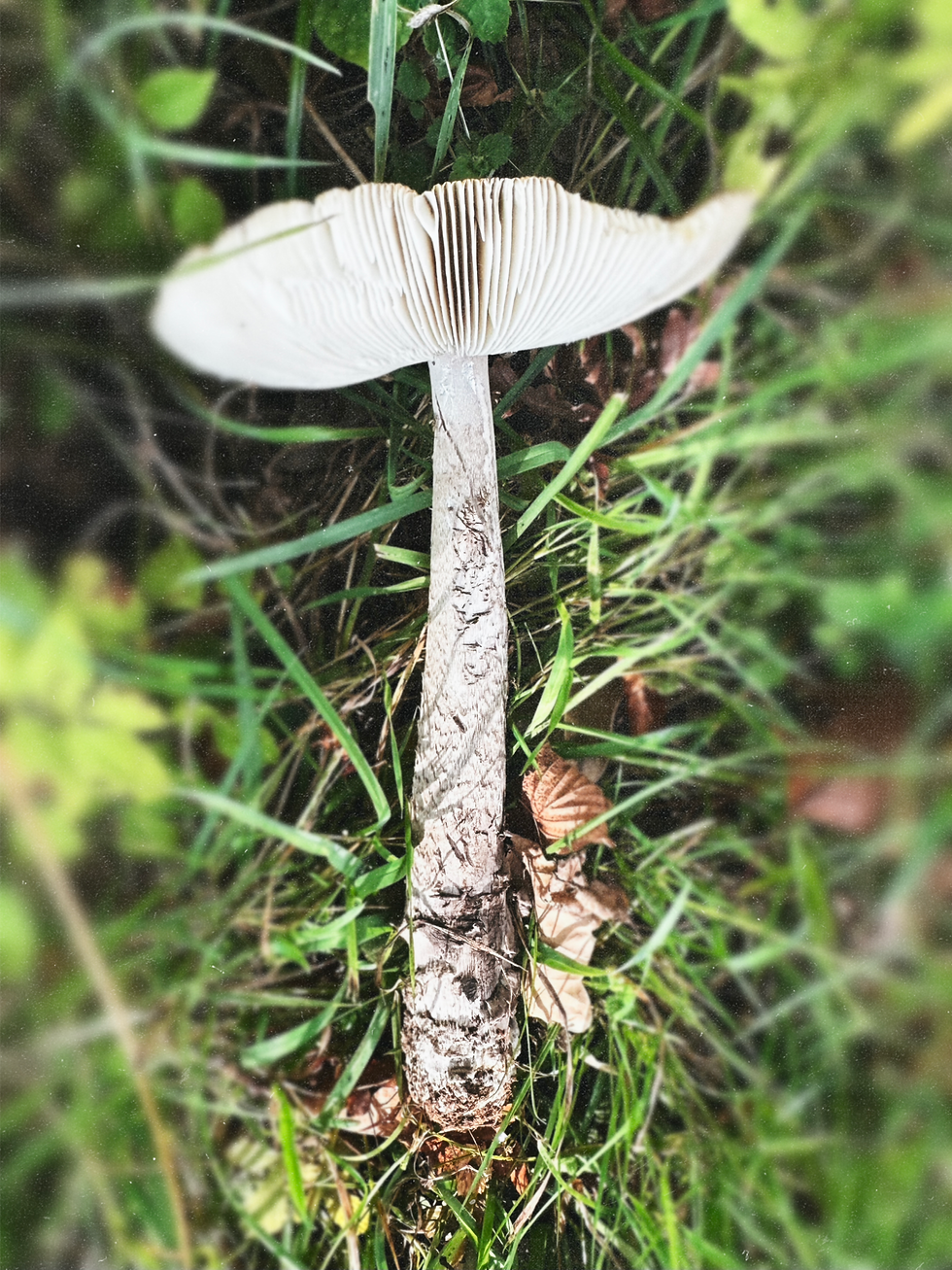
🍄🟫 Gills: Creamy white, free (not attached to the stem).
🍄🟫 Stem: Pale grey, decorated with a “snakeskin” pattern of darker scales or bands. No ring.
🍄🟫 Volva: A fragile, sack-like base that often collapses or leaves remnants around the stem foot.
🍄🟫 Spore Print: White
This mushroom often looks a bit scruffy veil bits, tattered base, patterned stem and that ruggedness is part of its charm.

Where & When You’ll Find It
Grows in mixed woodlands, often with oak, beech, birch, other hardwoods (sometimes conifers). The season is late summer through autumn (August to November in much of Europe). It is scattered, not in dense clusters. Its range extends across Europe and into parts of North America.
Safety & Edibility
Some sources list the snakeskin grisette as edible, but with serious caution. Because it’s part of Amanita and can be mistaken for more dangerous species, field guides often advise against collecting it for food.
For magical or contemplative purposes, you don’t need to harvest it you can work with its image, memory, or energy without consuming it.
Magical Correspondences
🍄🟫 Element: Earth Realm: Threshold, underworld, shadow, hidden realms
🍄🟫 Themes: Transformation, initiation, unveiling, ancestral contact
🍄🟫 Color / Pattern: Snakeskin, shedding, renewal, hidden motion
🍄🟫 Spirit Allies: Earth & forest spirits, ancestors, guardians of liminal space
🍄🟫 Usage: Ritual object, meditative focus, sigil in spellcraft
Because of its connection with the earth and decay-to-renewal cycle, it lends itself to workings of shadow, endings & beginnings, inner revelation, and ancestral remembering.

Folkloric Threads & Symbolic Echoes
Mushrooms have long been seen as dwellers of the underworld, or gifts from the dead, bridging decay and renewal. In broader mushroom lore, stepping into a fairy ring might lead one into faerie realms; mushrooms in general are bound with the mystical idea of hidden worlds. The snakeskin pattern connects A. ceciliae to serpent lore: wisdom, shedding, the chthonic, the mediator between earth and depth. Some enthusiasts report finding snakeskin grisettes in quiet, liminal places like old woodlands or graveyards lending metaphorical weight to its role as a guardian of hidden paths or ancestral memory.
The snakeskin grisette is more than a woodland fungus. It is a bridge between the seen and the unseen, the decayed and the renewed, the whispered world and the everyday. Its earthy presence, muted colors, and patterned stem suggest subtlety rather than spectacle.
For beginners, it’s a wonderful “study mushroom” one that invites patience, observation, and reverence. And for the magically inclined, it offers a quiet doorway: to shadow work, ancestral connection, and hidden insight.
Next time you’re in the woods and find that patterned stem emerging from leaf litter, pause. Let the snake’s skin and the fungus’s form speak to you of thresholds, of hidden growth, and of the ongoing cycle beneath all things.


Comments